



Potassium Channel
KcsA
Potassium channels are the most widely distributed type of ion channel and are found in virtually all living organisms. They form potassium-selective pores that span cell membranes. Potassium channels are found in most cell types and control a wide variety of cell functions. Potassium channels function to conduct potassium ions down their electrochemical gradient, doing so both rapidly and selectively. Biologically, these channels act to set or reset the resting potential in many cells. In excitable cells, such asneurons, the delayed counterflow of potassium ions shapes the action potential. By contributing to the regulation of the action potential duration in cardiac muscle, malfunction of potassium channels may cause life-threatening arrhythmias. Potassium channels may also be involved in maintaining vascular tone.
All Product Categories
-
Potassium Channel Inhibitors
(668)
View all products
-
Potassium Channel Agonists
(31)
View all products
-
Potassium Channel Antagonists
(39)
View all products
-
Potassium Channel Activators
(240)
View all products
-
Potassium Channel Modulators
(39)
View all products
-
Potassium Channel Chemical
(1)
View all products
-
Potassium Channel Controls
(11)
View all products
-
Potassium Channel Related Products (1121)
Related Products (1121)

-
Antibodies (6)
-
Related Compound Screening Libraries (1)
-
(-)-Sotalol
 0 ImagesSynonyms: (R)-Sotalol(-)-Sotalol ((R)-Sotalol) is the R-isomer of Sotalol. (-)-Sotalol is a hERG inhibitor, with a Kd of 0.60 μM. (-)-Sotalol can be used for the research of cardiac arrhythmias.
-
VU0134992
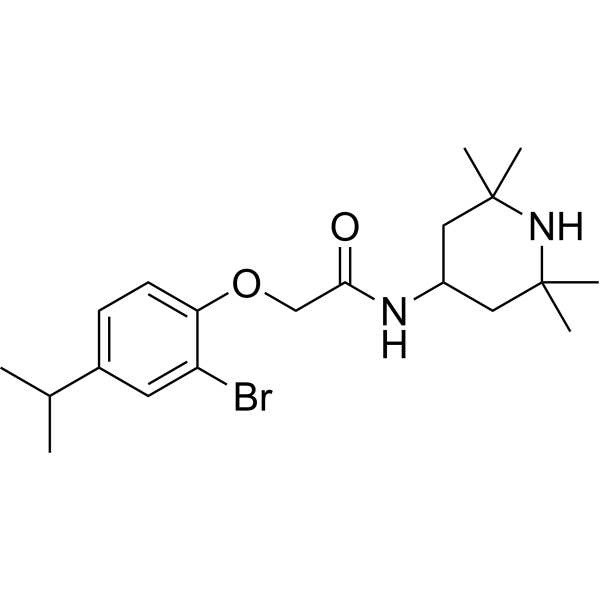 0 ImagesVU0134992 is the first subtype-preferring, orally active and selective Kir4.1 potassium channel pore blocker, with an IC50 of 0.97 µM. VU0134992 is 9-fold selective for homomeric Kir4.1 over Kir4.1/5.1 concatemeric channels (IC50=9 µM) at -120 mV.
-
KIO-301 chloride hydrochloride
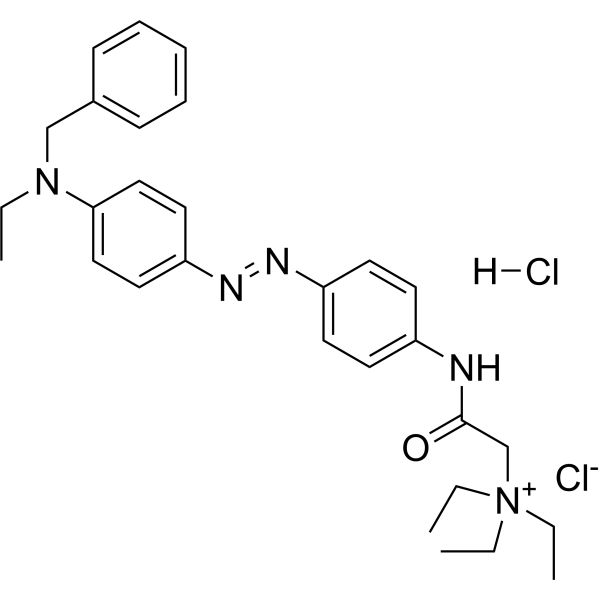 0 ImagesCat. No.: HY-161092APurity: 99.61%KIO-301 chloride hydrochloride is an azobenzene photoswitchable compound that blocks voltage-gated ion channels, including hyperpolarization-activated cyclic nucleotide gating (HCN, during exposure to visible light) ) and voltage-gated potassium channels (voltage-gated potassium channels).
-
ADWX 1 TFA
 0 ImagesCat. No.: HY-P1409APurity: 98.37%ADWX 1 TFA is a new peptide inhibitor that is potent and selective for Kv1.3 with an IC50 value of 1.89 pM. ADWX 1 inhibits Kv1.3 channel activity specifically to inhibit both the initial calcium signaling and NF-κB activation. ADWX 1 TFA ameliorates the disease in rats of experimental autoimmune encephalomyelitis (EAE) models. ADWX 1 TFA can be used to study T cell-mediated autoimmune diseases.
-
LUF7346
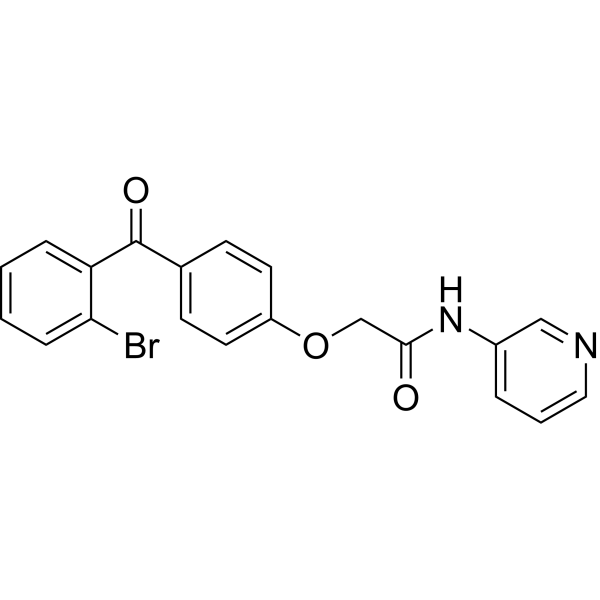 0 ImagesLUF7346 is a potent Kv11.1 (hERG) channel negative allosteric modulator, with an IC50 of 35.6 ± 3.2 nM.
-
Uridine 5'-monophosphate-d11 dilithium
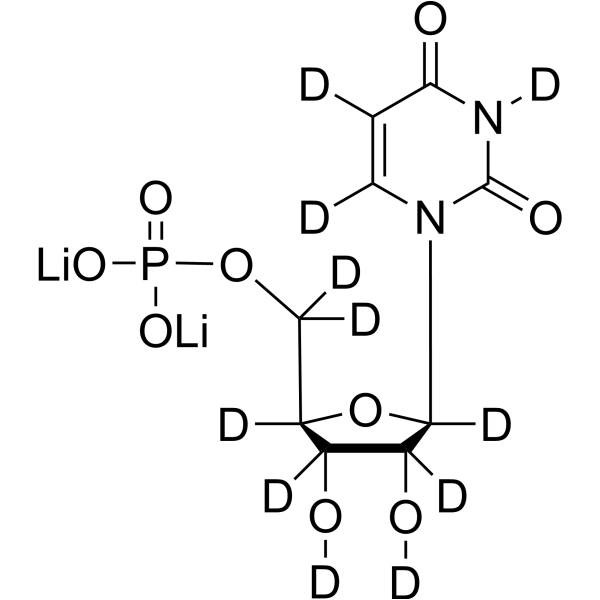 0 ImagesCat. No.: HY-101981S2Purity: 99.90%Synonyms: 5'-Uridylic acid-d11 dilithiumUridine 5'-monophosphate-d11 (5'- Uridylic acid-d11) dilithium is deuterium labeled Uridine 5'-monophosphate (HY-101981). Uridine 5'-monophosphate (5'-Uridylic acid) is an orally active mitochondrial ATP-dependent potassium channel activator that has a protective effect on the heart. Uridine 5'-monophosphate can promote the synthesis of CDP-choline and induce apoptosis in intestinal epithelial cells, which is beneficial for gut development and reduces diarrhea.
-
Disopyramide phosphate
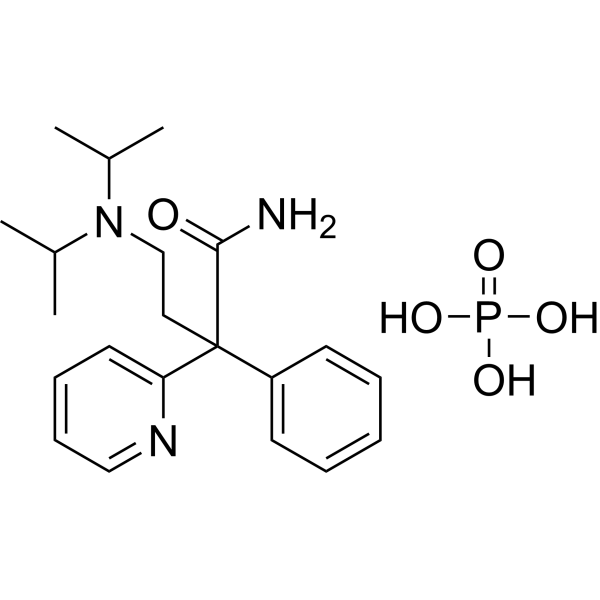 0 ImagesSynonyms: Dicorantil phosphate; SC-7031 phosphateDisopyramide phosphate is a class IA antiarrhythmic agent with efficacy in ventricular and atrial arrhythmias. Disopyramide phosphate blocks the fast inward sodium current of cardiac muscle and prolongs the duration of cardiac action potentials. Disopyramide phosphate inhibits HERG encoded potassium channels. Disopyramide phosphate also exhibits complex protein binding, and has a potent negative inotropic action.
-
AZSMO-23
 0 ImagesAZSMO-23 is a potent hERG K+ channel activator. AZSMO-23 activats WT hERG pre-pulse and tail current with EC50 values of 28.6, 11.2 µM, respectively. AZSMO-23 has the potential for the research of long QT syndrome.
-
VU625
 0 ImagesVU625 is an inhibitor for potassium channel, that selectively inhibits mosquito Aedes aegypti inward rectifier potassium channel 1 (AeKir), with IC50 of 96.8 nM in HEK293 cell. VU625 can be used in development of insecticide.
-
6-FAM-AEEAc-Stichodactyla helianthus Neurotoxin (ShK) TFA
 0 ImagesCat. No.: HY-P4742ASynonyms: 6-FAM-AEEAC-SHK TFA6-FAM-AEEAc-Stichodactyla helianthus Neurotoxin (ShK) TFA (6-FAM-AEEAC-SHK TFA) is a peptide neurotoxin conjugated with a fluorescent marker. 6-FAM-AEEAc-Stichodactyla helianthus Neurotoxin (ShK) TFA can block voltage-gated potassium channels (kv1.1 and kv1.2) to prolong the duration of action potentials, thereby affecting the conduction of neural signals. 6-FAM-AEEAc-Stichodactyla helianthus Neurotoxin (ShK) TFA can be used in neuroscience research.
-
Rosuvastatin-d6
 0 ImagesCat. No.: HY-17504AS1CAS No.: 2070009-40-2Synonyms: ZD 4522-d6Rosuvastatin-d6 (ZD 4522-d6) is deuterium labeled Rosuvastatin. Rosuvastatin (ZD 4522) is a competitive HMG-CoA reductase inhibitor with an IC50 of 11 nM. Rosuvastatin potently blocks hERG current with an IC50 of 195 nM, delayed cardiac repolarization, and thereby prolonged action potential durations (APDs) and corrected QT interval (QTc) intervals. Rosuvastatin reduces the expression of the mature hERG and the interaction of heat shock protein 70 (Hsp70) with the hERG protein. Rosuvastatin effectively lowers low-density lipoprotein (LDL) cholesterol, triglycerides, and C-reactive protein levels.
-
cis-KV1.3-IN-1
 0 Imagescis-KV1.3-IN-1 (Compound cis-18) is a cis-isomer of KV1.3-IN-1 (HY-155516). cis-KV1.3-IN-1 is an inhibitor of the KV1.3 channel. cis-KV1.3-IN-1 (10 μM) inhibits KV1.3 by 25.53% in Xenopus oocytes expressing human hKV1.3.
-
Gliclazide-d4
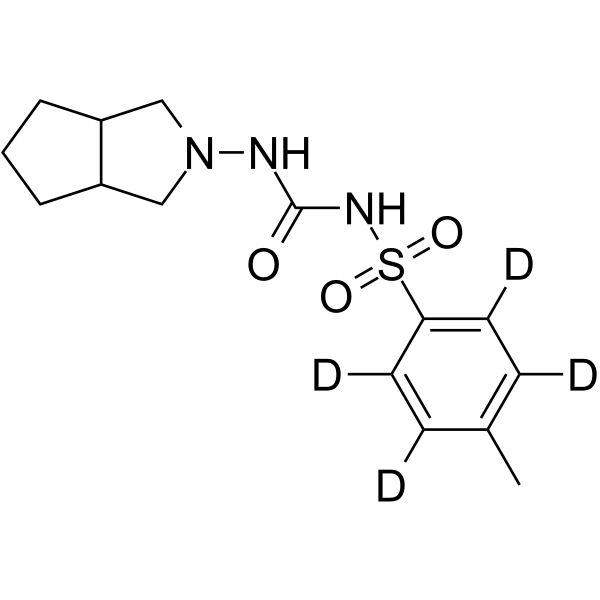 0 ImagesCat. No.: HY-B0753SCAS No.: 1185039-30-8Gliclazide-d4 (S1702 D4) is the deuterium labeled Gliclazide. Gliclazide (S1702) is a whole-cell beta-cell ATP-sensitive potassium currents blocker with an IC50 of 184 nM. Gliclazide is used as an antidiabetic.
-
MK-8153
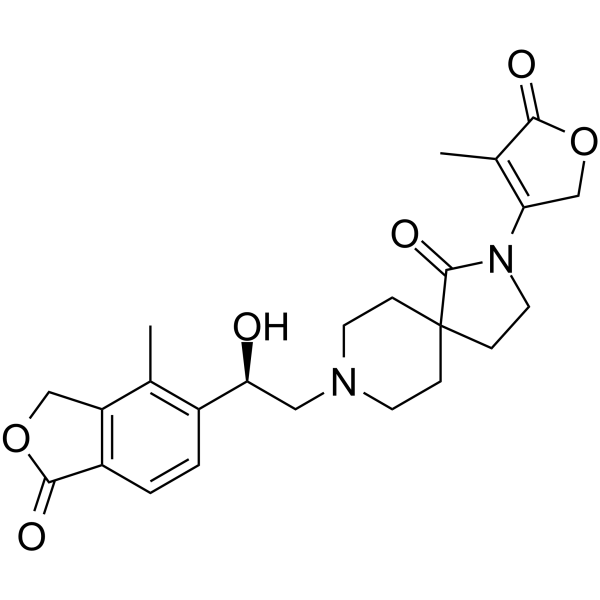 0 ImagesCat. No.: HY-132201CAS No.: 1548286-45-8MK-8153 is a potent, selective and orally active inhibitor of renal outer medullary potassium channel (ROMK), with IC50s of 5 nM, 34 μM for ROMK electrophysiology (EP) and hERG EP, respectively. MK-8153 can be used as the diuretic/atriuretic.
-
Amiodarone-d4 hydrochloride
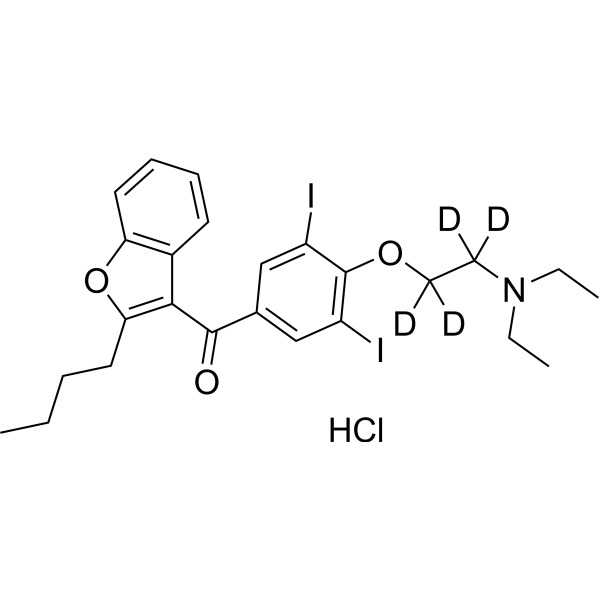 0 ImagesAmiodarone-d4 (hydrochloride) is the deuterium labeled Amiodarone hydrochloride. Amiodarone hydrochloride, a benzofuran-based Class III antiarrhythmic agent, inhibits WT outwardIhERG tails with an IC50 of ~45 nM. Amiodarone hydrochloride induces cell proliferation and myofibroblast differentiation via ERK1/2 and p38 MAPK signaling in fibroblasts. Amiodarone hydrochloride can be used in the research of both supraventricular and ventricular arrhythmias.
-
Astemizole-d3
 0 ImagesCat. No.: HY-12532SCAS No.: 1189961-39-4Astemizole-d3 is the deuterium labeled Astemizole. Astemizole (R 43512), a second-generation antihistamine drug to diminish allergic symptoms with a long duration of action, is a histamine H1-receptor antagonist, with an IC50 of 4 nM. Astemizole also shows potent hERG K+ channel blocking activity with an IC50 of 0.9 nM. Astemizole has antipruritic effects.
-
Guanfu base G
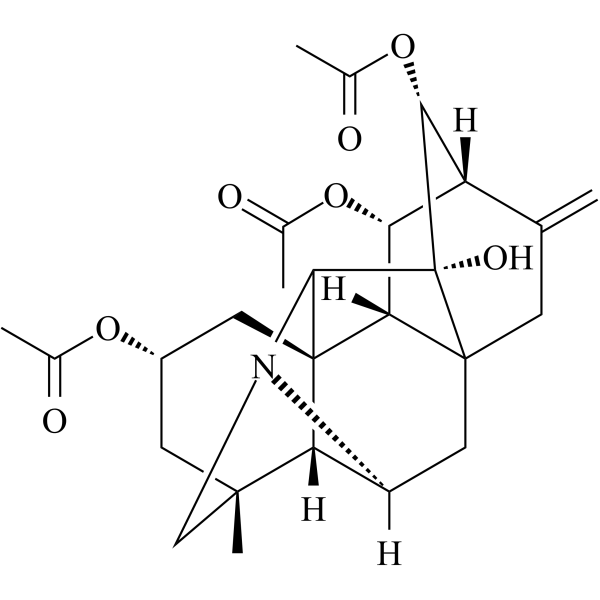 0 ImagesGuanfu base G is an antiarrhythmic alkaloid isolated from Aconitum coreanum. Guanfu base G inhibits HERG channel current with an IC50 of 17.9 μM.
-
Naluzotan hydrochloride
 0 ImagesSynonyms: PRX 00023 hydrochlorideNaluzotan hydrochloride is a novel, potent, and selective amidosulfonamide 5-HT1A agonist with IC50 and Ki of appr 20 nM and 5.1 nM, used for the treatment of anxiety and depression; Also a weak hERG K+ channel blocker, with IC50 of 3800 nM.
-
Kv3.1 modulator 2
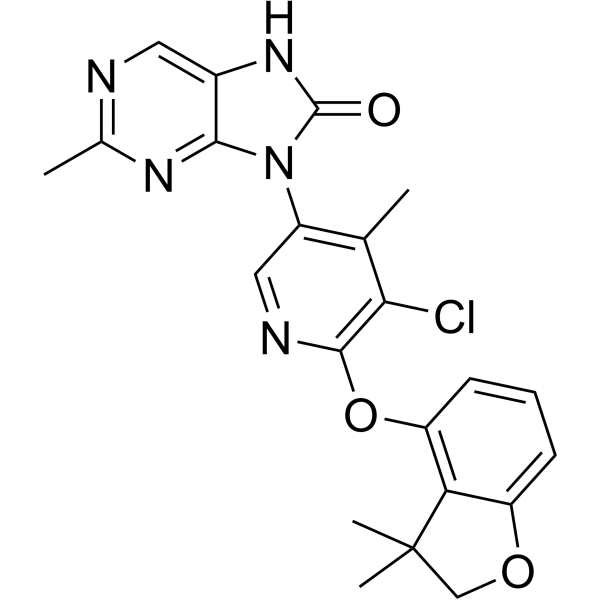 0 ImagesKv3.1 modulator 2 (compound 4) is a Kv3.1 channels modulator with an EC50 value of 68 nM.




